
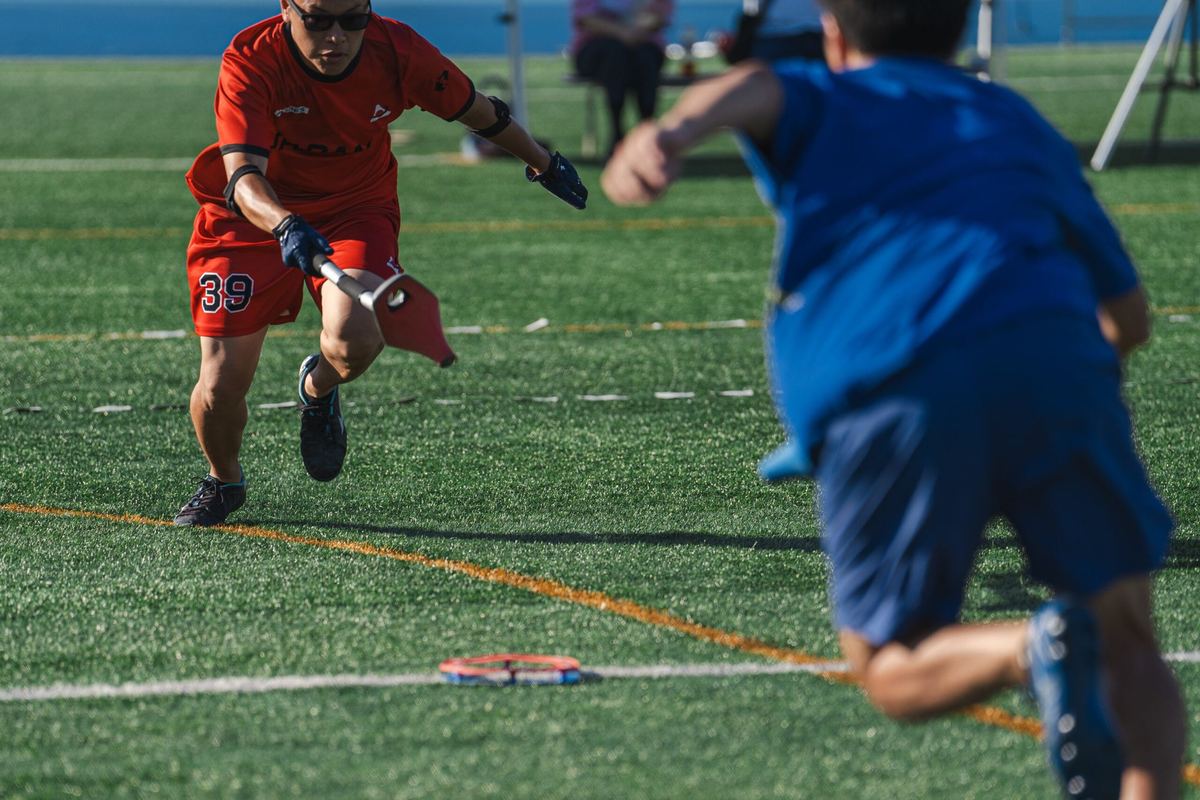
Start with the video
Rules explained (in Japanese)
Basic skills
Ring Cross in 30 seconds
Throw from outside, catch inside
A pass thrown from outside the scoring zone and caught by a teammate inside it scores one point.
No running with the ring
Stop when you have the ring, then pass. Players without the ring can move freely.
Self-judged
You may not gain an advantage through contact. Players call their own fouls and settle them together.
- Players
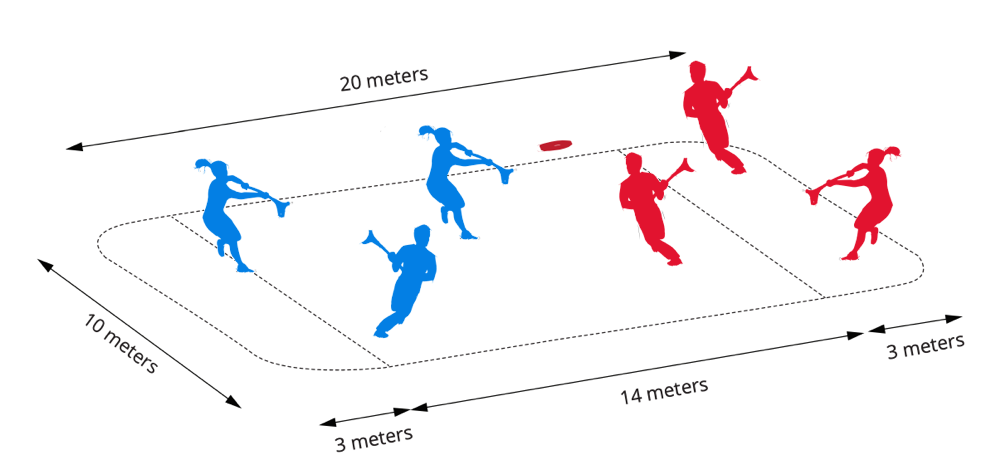
- 3 against 3 (up to 5 per team, unlimited substitutions)
- Together
- Mixed-gender, for all ages, on the same field
- Field
- 20 m × 10 m, with a 3 m scoring zone at each end
- Equipment
- A YOU.FO stick and ring
- Safety
- At least 5 m of space around the field
How to score
Catch a teammate's pass inside the opponent's scoring zone for one point. The pass must come from outside the zone.
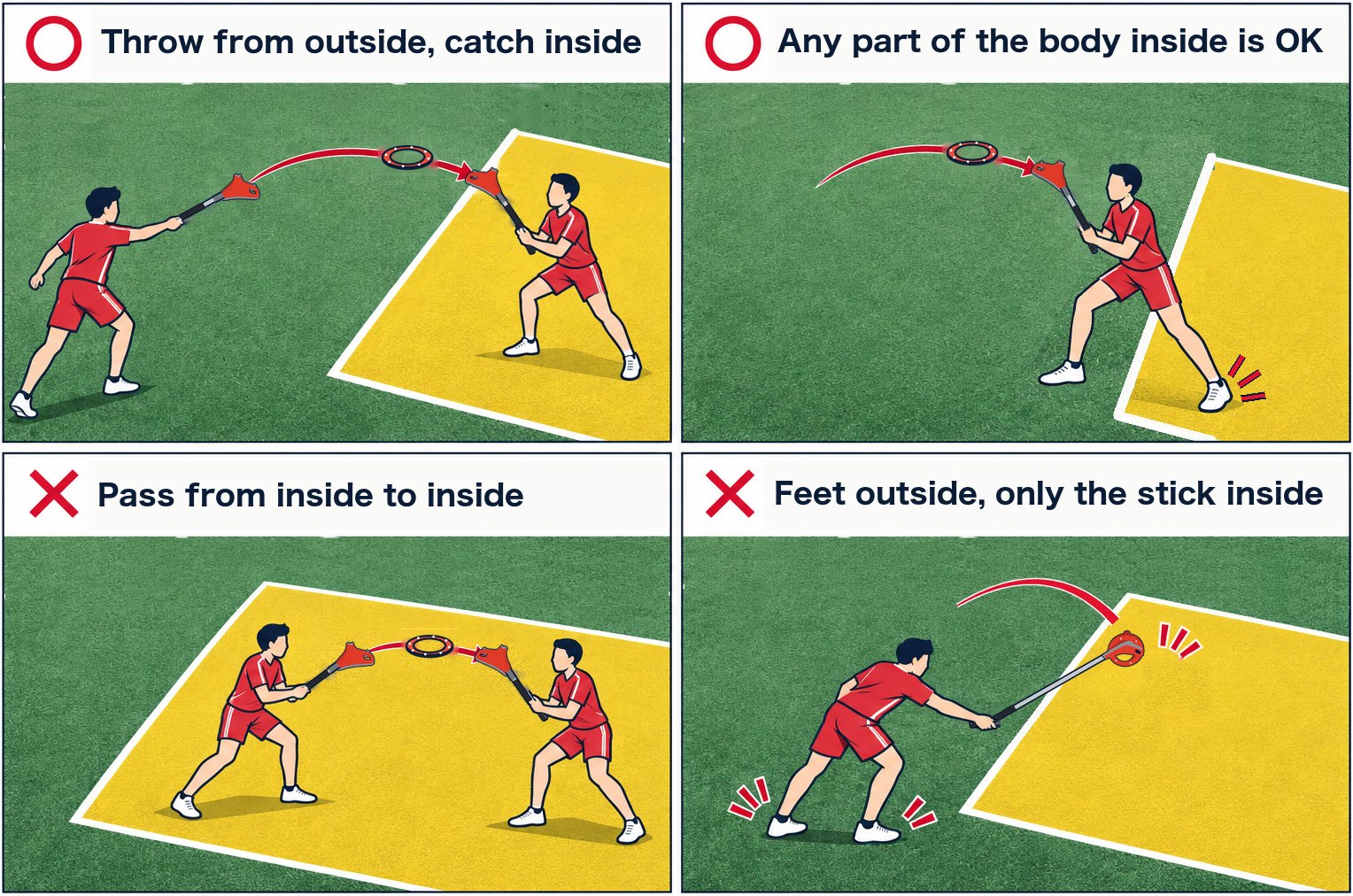
- Any part of your body touching the zone when you catch counts, even just stepping on the line.
- On a jump or dive, the first part of your body to land decides. Inside the zone or on the line scores.
- Intercepting an opponent's pass inside the zone does not score.
When you have the ring
Stop as quickly as you safely can after a catch. One or two braking steps are fine, but you cannot keep running. Once stopped, you can pivot on one foot.
- Throw and catch only with the stick. No throwing or catching by hand, and no using the grip end.
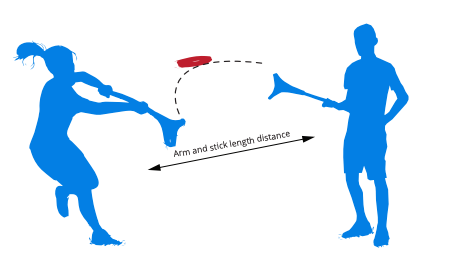
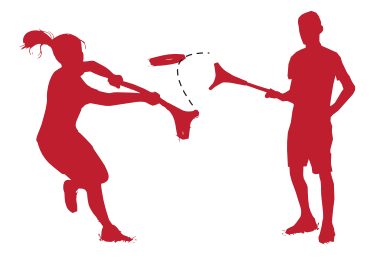
- A pass must travel at least one arm-and-stick length. No handing over or dropping the ring onto a teammate's stick.
- After you throw, you cannot take the ring again until another player has touched it.
Pass distance
Defense
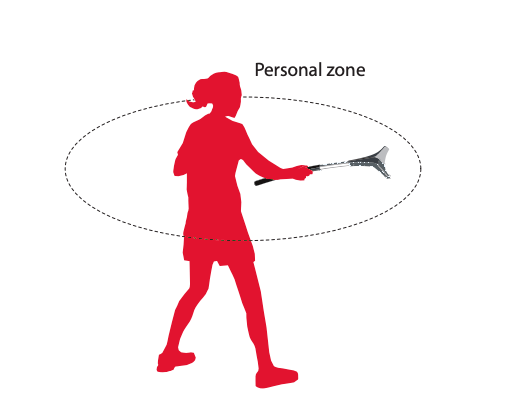
Personal zone
You cannot enter the area around the ring holder: one arm-and-stick length in every direction. It keeps the thrower safe and gives a fair chance to pass.
Blocking and the 5-second count
Stand just outside the personal zone (no further than two arm-and-stick lengths), hold your stick level in front of your face and keep your feet still. Then you can start the count. The thrower must release within 5 seconds.
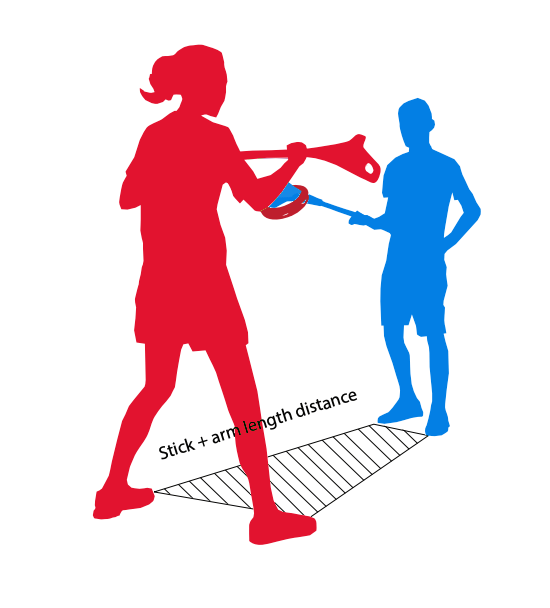
543210
If the ring has not been released at zero, possession goes to the blocker. Only one player can block at a time.
Interceptions
You can win the ring by catching an opponent's throw or safely tapping it out of the air. No wild swings, and never throw your stick.
If the ring lands (claiming)
Play continues when the ring hits the ground. The first player to place the coloured tip of the stick inside the ring claims it.
- The player who threw it cannot claim it (except for an accidental drop inside their own personal zone).
- Once claimed, everyone else must leave the claimer's personal zone.
- If you claim inside the opponent's scoring zone, you must pass out of the zone before you can score.
How a game flows
Start
Everyone stands in their own scoring zone with the ring at center field. On "Ready, set, go", the first team to claim the ring starts. Approach the ring from its left side for safety.
Play
Pass your way up the field. The clock keeps running and play continues when the ring lands, usually even outside the field.
Score
After a point, the teams switch sides.
Restart
The scoring team launches the ring toward the other team.
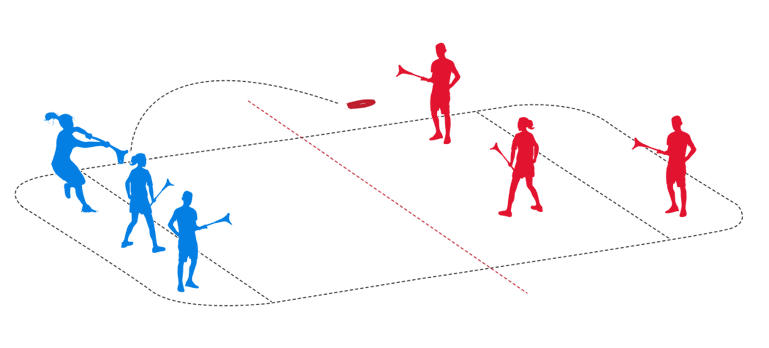
After a score
Teams switch sides and the scoring team launches the ring to the receiving team, which starts from where the ring lands or is caught.
Ring Rally, where two players throw back and forth for a score, has its own rules on the Ring Rally page.
Fouls and self-judging
Players judge the game themselves. Advantage comes from timing, positioning, movement and skill, never from contact.
Call
Raise your hand, say "FOUL" and give a brief reason.
10 seconds
Both teams try to settle it within 10 seconds.
Resolve
The players involved talk it through, with captains stepping in if needed.
Observer
Only if it is still unresolved does the tournament observer decide.
Tournament format
- Match time
- Group stage 10 min / knockout 12 or 15 min / full league match 4 × 10 min (set for each event)
- Points
- Win 3, draw 1, loss 0
- If tied
- Knockout games go to golden score (next score wins), then Zone2Zone if still tied.
Summary based on Official Global Rulebook V2.0 (diagrams from the YOU.FO RingCross World Federation rulebook). See the official rulebook for full details.
Questions about the rules
Is there any contact?
It is a non-contact sport, and you may not gain an advantage through contact. Not every touch is a foul; dangerous contact or contact that gives an unfair advantage is.
Is there a referee?
No referee runs the game. Players call and settle fouls themselves. At tournaments, an observer decides if it cannot be resolved.
What if the ring leaves the field?
Play normally continues. If the venue requires out-of-bounds rules, teams agree on them before the game.
Can I catch the ring with my hand?
No. Throw and catch only with the stick.
What if we do not have enough players?
Other formats such as 4 against 4 are allowed if both teams agree.
Can beginners play?
Yes. Start with simply throwing and catching. There are also trial sessions.